

admin

Uncategorized

Can a chiropractor help my posture?

Good posture is about more than just standing up straight. It’s the foundation of a healthy spine, balanced muscles, and proper movement.  Unfortunately, in today’s world of desk jobs, smartphones, and streaming binges, poor posture has become increasingly common. If you’re struggling with poor posture, you might be wondering if a chiropractor can help. The short answer is yes.  Chiropractors are highly trained in spinal health and can provide effective, non-invasive treatments to correct postural imbalances, reduce pain, and support long-term wellness. In this blog, we’ll explore why posture matters, the common causes of poor posture, the health problems it can create, and how chiropractic care can help you achieve better alignment and long-term results. Why does posture matter? Posture refers to the way you hold your body while sitting, standing, or moving. Good posture keeps your bones and joints in the correct alignment, reducing unnecessary strain on muscles, ligaments, and the spine. Benefits of good posture include: Less strain on the spine and joints Better breathing and lung function Better circulation and digestion Better physical performance Lower risk of back and neck pain Higher confidence and body language   Poor posture, on the other hand, can create health risks. Poor posture could be slouching shoulders, forward head posture, or a tilted pelvis, for example. These put stress on the spine and muscles, often leading to pain, fatigue, and possibly even long-term spinal changes. What causes poor posture? Poor posture doesn’t happen overnight. It usually develops over time due to lifestyle habits, work environments, or health conditions. Some of the most common causes of poor posture include: Prolonged sitting: Desk jobs and long commutes encourage slouching and rounded shoulders. Technology use: Looking down at phones or laptops creates “tech neck.” Weak core muscles: A lack of strength in the abdominal and back muscles makes it harder to support good posture. Injury or trauma: Past injuries can alter movement patterns, leading to compensations in posture. Footwear: High heels or unsupportive shoes can affect spinal alignment. Stress and fatigue: Tension and tiredness often cause slouching or hunching. Over time, these habits can create structural imbalances, tight muscles, and misalignments in the spine. Health problems linked to poor posture Poor posture isn’t just about appearance. It can have real consequences for your health. Some of the most common problems include: Chronic back and neck pain Headaches and migraines caused by tension in the neck and shoulders Shoulder pain from rounded or hunched shoulders Nerve compression leading to tingling, numbness, or weakness Reduced mobility and flexibility Digestive issues caused by compressed abdominal organs Shallow breathing due to restricted lung expansion Left unaddressed, poor posture can even contribute to degenerative changes in the spine, like disc problems or arthritis. Can a chiropractor really help with posture? Yes! Chiropractors can play a key role in assessing, correcting, and maintaining good posture. Because chiropractors specialise in the spine and musculoskeletal system, they’re uniquely qualified to identify misalignments and develop treatment plans that address both the symptoms and underlying causes of poor posture. Here’s how chiropractic care can help: 1. Postural assessment Your chiropractor will start with a thorough consultation, examining your posture, spinal alignment, range of motion, and muscle balance. They may take X-rays or use posture analysis tools to get a clearer picture of how your body is aligned. This assessment helps pinpoint the root cause of your poor posture, whether it’s muscular imbalance, spinal misalignment, or lifestyle habits. 2. Spinal adjustments Chiropractic adjustments (or spinal manipulations) are one of the most effective tools for posture correction. By gently realigning the spine, chiropractors can reduce pressure on the nerves, restore mobility to restricted joints, and bring the body closer to its natural, upright position. For example: Forward head posture (common from desk work) can be improved with cervical spine adjustments. Rounded shoulders may be corrected by restoring thoracic spine mobility. Pelvic tilt can be addressed through adjustments to the lumbar spine and hips. 3. Muscle and soft tissue therapy Poor posture often creates tight muscles in some areas and weakness in others.  Chiropractors sometimes use soft tissue techniques to relax overworked muscles and reduce tension. These could be trigger point therapy, stretching, or massage. This is especially helpful in cases of tech neck, where the neck and shoulder muscles become strained from constantly looking down at devices. 4. Corrective exercises Chiropractic care goes beyond adjustments. Most chiropractors prescribe rehabilitative exercises and stretches to strengthen weak muscles and retrain your body for better posture. For example: Strengthening the core and upper back Stretching the chest and hip flexors Practising posture awareness exercises These exercises help support long-term changes and prevent bad habits from creeping back. 5. Lifestyle and ergonomic advice Your chiropractor will also help you make practical changes to your daily routine. This may include: Ergonomic workstation setup (desk, chair, monitor height) Advice on sleeping positions and pillow support Tips for safe lifting techniques Guidance on footwear and physical activity These changes are important in making sure you maintain good posture after your sessions. Benefits of chiropractic care for posture Patients who seek chiropractic care for posture correction often report: Reduced pain and tension in the back, neck, and shoulders Improved spinal alignment Better mobility and flexibility Increased energy levels (less strain on muscles means less fatigue) Improved breathing and circulation Greater confidence and appearance from standing taller and straighter Importantly, chiropractic care addresses the root cause of poor posture rather than just masking the symptoms. How long does it take to improve posture with chiropractic care? The timeline for posture correction varies depending on the individual. Factors such as the severity of your posture issues, how long they’ve been present, and your overall health all play a role. Mild posture problems may see improvement in a few weeks of regular chiropractic sessions. Long-term or severe issues may take several months of consistent treatment, combined with exercises and lifestyle changes, to fully correct. The key is consistency. Going to chiropractic appointments regularly and following through

Chiropractor providing sciatic pain relief for male patient on treatment table
Uncategorized

Can a chiropractor help with a slipped or herniated disc?

Back pain is one of the most common health complaints worldwide, and one of the leading causes is a slipped disc — also known as a herniated disc or disc bulge. This painful and sometimes debilitating condition can significantly affect your mobility and quality of life. If you’ve been diagnosed with a slipped disc, or you suspect you may have one, you might be wondering: Can a chiropractor help? The answer for many people is yes — chiropractic care can be an effective, non-invasive treatment option for herniated discs. In this blog, we’ll explore what a slipped or herniated disc is, what causes it, the symptoms to look out for, and how a chiropractor can help relieve pain and support recovery. What is a slipped or herniated disc? Your spine is made up of 24 bones (vertebrae), separated by intervertebral discs. These discs act as cushions, providing flexibility and absorbing shock during movement. Each disc has a soft, gel-like centre (nucleus pulposus) surrounded by a tough outer layer (annulus fibrosus). A herniated disc occurs when the soft inner material pushes through a crack or weakness in the outer layer. This can irritate or compress nearby nerves — especially in the lower back or neck — leading to pain, numbness, or weakness. The term “slipped disc” is commonly used but slightly misleading, as the disc doesn’t actually slip out of place — it herniates or bulges. Common causes of a slipped disc A slipped disc can happen suddenly or develop over time due to wear and tear. Common causes include: Poor posture or sitting for a long time Lifting heavy objects incorrectly Repetitive movements or twisting Degenerative disc disease (age-related wear) Trauma or injury, such as a fall or car accident Sedentary lifestyle or lack of core strength Some people are more prone to disc issues due to genetics, occupation, or chronic poor posture. Symptoms of a slipped or herniated disc Symptoms can vary depending on the location and severity of the herniation, but typically include: Sharp or burning back pain Pain radiating down the leg (sciatica) Numbness or tingling in the leg, foot, arm, or hand Muscle weakness Pain that worsens with movement, sneezing, or sitting Reduced mobility or stiffness In more severe cases, nerve compression may affect bladder or bowel function — this is a medical emergency and requires immediate care. Can a chiropractor help a herniated disc? Yes — many people with herniated or slipped discs find significant relief through chiropractic care. Chiropractors are trained to identify spinal issues and create treatment plans that address the underlying cause of your pain, not just the symptoms. Chiropractic treatment focuses on: Restoring spinal alignment Reducing pressure on nerves Improving mobility Supporting natural healing without surgery or medication What does chiropractic treatment for a herniated disc involve? If you visit a chiropractor for a suspected or confirmed slipped disc, here’s what you can expect: 1. Comprehensive assessment Your chiropractor will begin by taking a detailed medical history and discussing your symptoms. They’ll perform a physical examination, testing your reflexes, mobility, and nerve function. If needed, they may refer you for imaging, such as an MRI or X-ray, to confirm the diagnosis and determine the extent of disc involvement. 2. Individualised treatment plan Once a diagnosis is confirmed, your chiropractor will develop a treatment plan based on your condition, overall health, and lifestyle. The goal is to reduce pressure on the affected nerve, relieve pain, and support long-term recovery. 3. Spinal adjustments Chiropractors may use gentle spinal adjustments to help improve spinal mobility and alignment. For disc injuries, the technique used is typically low-force and carefully targeted to avoid aggravating the disc. 4. Soft tissue therapy Muscle tightness can worsen disc symptoms by pulling on the spine or compressing nerves. Chiropractors often incorporate massage, trigger point therapy, or myofascial release to relax surrounding muscles and improve circulation to the area. 5. Rehabilitation and exercise Targeted rehabilitative exercises are a key part of disc recovery. Your chiropractor will guide you through stretches and strengthening movements designed to: Stabilise your spine Strengthen your core Improve flexibility Prevent further injury You’ll likely be given home exercises to continue between appointments. 6. Posture and lifestyle advice Chiropractors take a holistic approach to care. They may provide advice on how to improve posture, sleep ergonomics, workplace setup, and daily habits to support your spine and prevent re-injury. Benefits of chiropractic care for herniated discs Many patients report improvements in pain, mobility, and overall well being after a course of chiropractic treatment. Some of the key benefits are: Non-surgical, drug-free care Reduced nerve irritation and inflammation Improved spinal alignment and posture Increased mobility and function Prevention of future flare-ups Best of all, chiropractic care targets the root cause rather than masking symptoms, supporting your body’s ability to heal naturally. Are chiropractic adjustments safe for a herniated disc? When performed by a qualified and experienced chiropractor, spinal adjustments are considered safe for many people with disc issues. That said, not every patient is a candidate for spinal manipulation, particularly in cases involving: Severe disc extrusion Progressive neurological symptoms Loss of bladder or bowel control Your chiropractor will always conduct a thorough screening and refer you to another specialist if chiropractic care is not appropriate. Chiropractic vs surgery for herniated discs For many people, chiropractic care can prevent the need for surgery. While surgery may be necessary in severe or persistent cases, conservative care should typically be explored first. Research shows that many patients experience significant relief from herniated disc symptoms with chiropractic treatment, particularly when combined with exercise and lifestyle changes. When to see a chiropractor for a slipped disc You should consider seeing a chiropractor if: You have ongoing back or neck pain Your pain is radiating down a limb You have numbness or tingling You want a non-invasive treatment option You’re looking to avoid or delay surgery   Early intervention often leads to better outcomes — so don’t wait until the pain becomes severe. Final thoughts

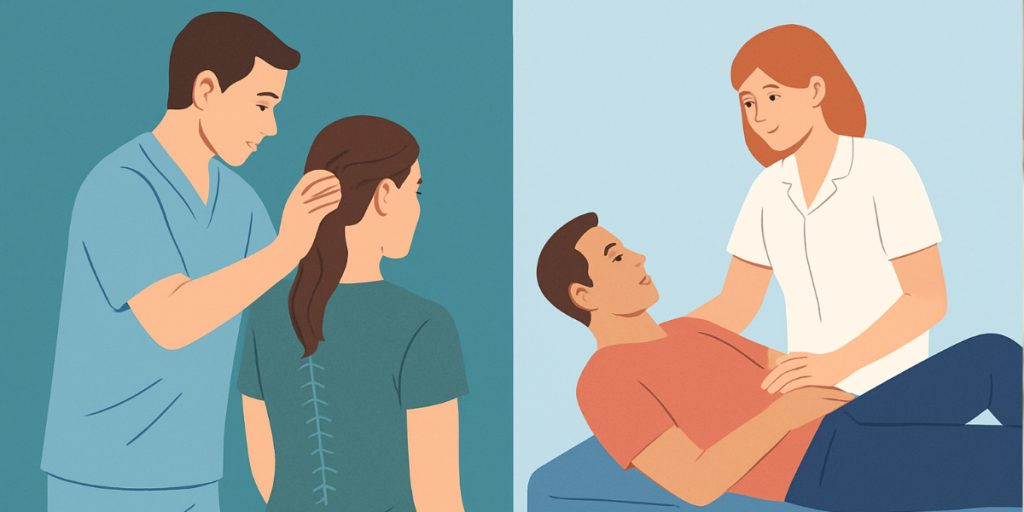
Illustration comparing chiropractor and osteopath treatments, showing posture and technique differences
Uncategorized

Difference Between a Chiropractor and an Osteopath: What’s Right for You?

When you’re dealing with back pain, joint issues, or general musculoskeletal discomfort, you might find yourself wondering: “Should I see a chiropractor or an osteopath?” Both chiropractors and osteopaths are healthcare professionals who focus on treating conditions affecting the muscles, bones, and joints. However, while their goals may be similar — reducing pain and restoring mobility — their approach, techniques, and philosophies often differ in subtle but important ways. In this blog, we’ll break down the key differences between chiropractors and osteopaths, what each profession specialises in, and how to decide which treatment is right for you. What is a chiropractor? A chiropractor is a registered healthcare professional who specialises in diagnosing and treating neuromuscular disorders, with a particular focus on spinal alignment. Key principles of chiropractic care: The spine plays a crucial role in overall health. Misalignments (subluxations) in the spine can affect the nervous system. Correcting spinal alignment helps the body heal naturally. Chiropractic treatment is based on the idea that proper spinal function supports the nervous system, which in turn helps the body function at its best. Chiropractors typically use hands-on adjustments to correct misalignments in the spine and joints, helping relieve pressure on nerves and reduce pain. Common conditions treated by chiropractors: Back and neck pain Sciatica Headaches and migraines Shoulder and joint pain Postural problems Sports injuries Disc issues and nerve compression Many chiropractors also provide rehabilitation exercises, ergonomic advice, and lifestyle support to prevent recurring issues. What is an osteopath? An osteopath is also a healthcare professional who treats a wide range of musculoskeletal problems, but they tend to focus more on the body as a whole — looking at how bones, muscles, ligaments, and organs work together in harmony. Core principles of osteopathy: The body is a unit — structure and function are interrelated. The body has an inherent ability to self-heal. Manual therapy can improve circulation, reduce restriction, and support function. Osteopaths use a broader range of manual techniques, not just focusing on the spine, but often treating limbs, fascia, and even the cranial system. Their approach is generally more holistic, sometimes incorporating internal health considerations like digestion or circulation into their diagnosis. Common conditions treated by osteopaths: Generalised musculoskeletal pain Arthritis and joint stiffness Circulatory problems Tension headaches Pregnancy-related pain Postural problems Repetitive strain injuries Osteopaths often work with both acute injuries and more chronic systemic issues, using gentler techniques where appropriate, such as cranial osteopathy. Chiropractor vs Osteopath: Key Differences Feature Chiropractor Osteopath Focus Area Primarily spine and nervous system Whole body structure and function Main Techniques Spinal adjustments and joint manipulations Soft tissue work, stretching, gentle mobilisation Philosophy Alignment of the spine improves overall health Balance and self-healing through body unity Training (UK) 4–5 year Master’s in Chiropractic 4–5 year Master’s in Osteopathy Regulating Body General Chiropractic Council (GCC) General Osteopathic Council (GOsC) Typical Conditions Back pain, sciatica, headaches, nerve-related issues General aches and pains, joint stiffness, systemic issues Techniques Used HVLA adjustments, drop tables, instrument-assisted adjustments Articulation, myofascial release, cranial osteopathy How are chiropractors and osteopaths similar? Despite their differences, chiropractors and osteopaths share a lot in common: Both use hands-on, manual therapy to relieve pain and restore function. Both aim to treat the underlying cause, not just the symptoms. Both take a holistic approach to health and well-being. Both complete rigorous university training and are legally regulated in the UK. Neither rely on medications or invasive surgery. Both may incorporate rehabilitation exercises and lifestyle advice into treatment. It’s also worth noting that treatment styles can vary between individual practitioners. Some chiropractors use more soft tissue techniques, and some osteopaths use joint manipulation, so there is often overlap in how they work. Which one should you see? Choosing between a chiropractor and an osteopath depends on several factors, including: 1. Your specific condition If your issue is spine-related (e.g. sciatica, disc problems, postural issues, neck stiffness, or nerve pain), a chiropractor may be the most direct route to relief. If your problem is more generalised or involves soft tissues, fascia, or systemic concerns (e.g. pregnancy discomfort, tension headaches, circulatory issues), an osteopath might be your first choice. 2. Your preference for technique If you’re comfortable with more precise spinal adjustments and focused joint manipulation, chiropractic may suit you well. If you prefer gentler techniques and a slower, more whole-body approach, osteopathy may feel more in line with your needs. 3. Treatment philosophy Chiropractors often focus more on nerve function and spinal alignment. Osteopaths view the body more broadly, emphasising balance and fluid movement across all systems. 4. Practitioner style Ultimately, treatment effectiveness comes down to the individual practitioner. It’s important to choose someone who listens, explains your condition clearly, and makes you feel comfortable and supported. Can chiropractors and osteopaths work together? Yes — in some cases, chiropractors and osteopaths may even refer patients to one another or work in multidisciplinary clinics. Since their approaches complement each other, they can be part of a wider healthcare team, especially in complex or chronic cases. For example, a patient may begin with chiropractic care to restore spinal function and reduce nerve irritation, then follow up with osteopathic treatments to address lingering soft tissue imbalances or support broader mobility. So, should you see a chiropractor or osteopath? Both chiropractors and osteopaths are highly trained professionals who help people move better, feel better, and live without pain. While chiropractors are often the go-to specialists for spinal health and nerve-related conditions, osteopaths offer a broader approach that may suit more generalised musculoskeletal concerns. The key is to understand your own needs, ask questions, and find a practitioner who aligns with your goals and values. Looking for expert chiropractic care in Wimbledon, Clapham, or Guildford? Dr Chris Penter provides evidence-based, personalised chiropractic care for patients suffering from back pain, sciatica, joint problems, and more. We take a holistic view of your health and work with you to develop a plan that addresses the root cause of your discomfort. Book your consultation today and

Woman holding lower back in pain, showing signs of sciatica discomfort
Uncategorized

Can a chiropractor help sciatica?

If you’ve ever had shooting pain down your lower back, hip, or leg, you may be dealing with sciatica. This is a common condition, but it can impact your daily life, making it difficult to walk, sit, or even sleep comfortably. The good news? Chiropractic care is a well-established, non-invasive treatment option that could offer you lasting relief from sciatica. In this blog, we’ll explore what sciatica is, what causes it, and how a chiropractor can help reduce sciatic nerve pain and improve your quality of life. What is sciatica? Sciatica is pain that runs along the sciatic nerve, which goes from your lower back down each leg. It usually affects only one side of the body and is often caused by compression or irritation of the nerve roots in the lower spine. Common symptoms of sciatica include: Sharp or burning pain in the lower back, buttock, and leg Tingling or “pins and needles” sensation Numbness or weakness in the affected leg Pain that worsens with prolonged sitting or sudden movements Sciatica isn’t a condition in itself — it’s a symptom of an underlying issue. That’s why it’s important to identify and treat the root cause. What causes sciatica? There are several underlying conditions that can lead to sciatic nerve irritation. Some of these are: Herniated or slipped disc – when the inner portion of a spinal disc pushes out and compresses the nerve. Spinal stenosis – a narrowing of the spinal canal that puts pressure on nerves. Degenerative disc disease – wear and tear on the spinal discs over time. Piriformis syndrome – a tight or inflamed piriformis muscle irritating the sciatic nerve. Spondylolisthesis – when one vertebra slips forward over another. Understanding the cause is key to effective treatment. That’s where chiropractic care can make a big difference. How can a chiropractor help with sciatica? Chiropractors are trained to diagnose and treat musculoskeletal conditions, including those that cause sciatica.  Their goal is to restore proper alignment to the spine, reduce nerve pressure, and help the body heal naturally without medication or surgery. Here are some of the ways that chiropractic treatment might help relieve sciatic pain: 1. Spinal adjustments Chiropractic adjustments (also known as spinal manipulations) are designed to improve spinal alignment and mobility. By gently realigning the vertebrae, chiropractors can reduce pressure on the sciatic nerve, helping to relieve pain at its source. Regular adjustments could also improve your posture and prevent future flare-ups by keeping your spine functioning as it should. 2. Soft tissue therapy Muscle tension, especially in the lower back or piriformis muscle, can aggravate the sciatic nerve. Chiropractors may use manual therapy techniques such as massage, trigger point therapy, or stretching to release tight muscles and reduce inflammation. This can be especially effective if your sciatica is linked to piriformis syndrome or muscle imbalance. 3. Rehabilitation exercises A good chiropractor won’t just treat the symptoms – they’ll give you the tools to help keep sciatica from coming back. This often includes a rehabilitation plan to do at home. It will likely contain stretches and exercises to strengthen your core, improve flexibility, and support spinal health. Strengthening the muscles that support your spine can reduce strain on the lower back and protect against future nerve compression. 4. Posture and ergonomic advice Poor posture and long hours of sitting can make sciatica worse. Your chiropractor can provide guidance on improving your posture, adjusting your workstation, and making small lifestyle changes that can have a big impact on your recovery. Simple changes like adjusting your chair height, using a lumbar cushion, or taking regular movement breaks can help reduce ongoing pressure on the sciatic nerve. Benefits of chiropractic care for sciatica Many patients report significant relief from sciatica after a course of chiropractic care. Some of the key benefits include: A drug-free, non-invasive approach Reduced pain and inflammation Improved mobility and function Targeted treatment of the root cause Fewer flare-ups over time Holistic support for overall spinal health It’s important to note that the effectiveness of chiropractic treatment depends on your individual case and underlying cause. A thorough assessment by a qualified chiropractor is essential before you begin any treatment. When to see a chiropractor for sciatica You should consider seeing a chiropractor if: Your sciatica has lasted more than a few days The pain is affecting your ability to move or sleep You prefer a non-surgical, natural approach to treatment You want to avoid relying on pain medication Chiropractors will begin with a comprehensive assessment, including a case history, physical examination, and possibly imaging (like MRI or X-ray) if needed. From there, you’ll receive chiropractic care that suits your specific condition. Final Thoughts: Can a Chiropractor Help Sciatica? Yes — in many cases, chiropractic care can be a safe and effective way to manage and relieve sciatica. By addressing the underlying cause of the nerve compression, chiropractors help reduce pain, restore mobility, and support your body’s natural healing process. If you’re struggling with lower back pain or symptoms of sciatica, don’t wait. Book a consultation with a qualified chiropractor to discuss your symptoms and explore your treatment options. Looking for sciatica relief in Clapham, Guildford, or Wimbledon? Dr Chris Penter offers professional, patient-focused chiropractic care to help relieve pain and restore function. Get in touch today to schedule your initial consultation.

Chiropractor performing neck adjustment on female patient
Uncategorized

What do chiropractors do?

What is chiropractic care? Chiropractic care is a form of manual therapy. It focuses on aligning the spine to help improve physical comfort, but also help the spine’s role in the nervous system and overall function of the body. Chiropractors use hands-on techniques, delivered through spinal adjustments or manipulation, to correct misalignments (also known as subluxations) and improve physical function. Along with manipulation, there may also be mobilisation of spine depending on the severity of the condition as well as soft tissue therapy.  The goal isn’t just pain relief. It’s also about overall improvement in health by de-stressing the body and improving overall mechanical function of the spine.  Modern chiropractors also manage joint problems such as shoulder problems etc. What conditions do chiropractors treat? Chiropractors treat a wide range of conditions of the spine, joints, muscles, and nervous system. These include: back pain (lower, mid, and upper back) neck pain and stiffness headaches and migraines sciatica joint pain (shoulders, knees, hips, etc.) sports injuries postural problems tension and stress-related disorders Benefits beyond pain relief While many patients visit a chiropractor to ease discomfort, others get chiropractic care for different reasons, like: better posture improved mobility and flexibility improved athletic performance reduced stress and muscle tension fewer headaches support for a more active lifestyle Chiropractors often work alongside GPs, physiotherapists, massage therapists, and other professionals as part of a holistic approach to physical health. What happens during a chiropractic appointment? If you’ve never been to a chiropractor before, it’s natural to wonder what will happen. Here’s what you could expect from a typical appointment: 1. Consultation and assessment The chiropractor will begin with a full medical history and a discussion about your symptoms, lifestyle, and any previous injuries. They may also perform a physical exam, checking your posture, range of motion, muscle tone, and spinal alignment as well as an orthopaedic and neurological assessment if needed.  2. Diagnosis and treatment plan Based on the assessment, your chiropractor will diagnose the issue and discuss personal treatment options. This could include spinal manipulation, soft tissue work, stretching, lifestyle advice, or other treatment particular to your condition. In rare cases where your condition cannot be managed by chiropractic care, your chiropractor will refer you to the appropriate healthcare provider or send you for X-rays and MRIs depending on the severity of the condition.  3. Chiropractic adjustment/ manipulation This is the hands-on part. A chiropractic adjustment involves applying controlled force to a joint – often in the spine – to improve mobility, relieve pressure, and restore function.  You may hear a popping or cracking sound. Don’t let this worry you. It’s simply gas being released from the joint. Adjustments are generally not painful, and many patients report immediate relief or a sense of relaxation afterward. Are chiropractors qualified healthcare professionals? Yes. Chiropractors undergo rigorous training to earn their qualifications.  In the UK, chiropractors must complete a 4 to 5-year degree in chiropractic care. This includes both theory and hands-on clinical training. They are also regulated by the General Chiropractic Council (GCC). This body makes sure that chiropractors meet strict standards for safety, ethics, and ongoing professional development. Is chiropractic care safe? Chiropractic care is considered safe for most people when performed by a qualified chiropractor.  Like any form of healthcare, there may be some risks, like temporary soreness, but serious side effects are rare. Your chiropractor will always perform a thorough assessment to make sure that the treatment they choose is appropriate for your condition, age, and overall health. When should you see a chiropractor? You don’t have to wait for a serious injury or long-term pain to benefit from chiropractic care. You could think about seeing a chiropractor if you have: ongoing back or neck pain frequent headaches limited mobility or stiffness bad posture from sitting at a desk all day muscle tension or general discomfort a wish to improve your physical wellbeing Whether you’re an office worker, an athlete, or just want to stay active and pain-free, chiropractic care could help you move and feel better. So, what do chiropractors do? In short, chiropractors help people move better, feel better, and live better. By focusing on the spine and nervous system, chiropractors aim to treat the root cause of discomfort rather than just the symptoms. If you’re curious about whether chiropractic care is right for you, the best place to start is with a consultation. It’s your first step toward better posture, reduced pain, and a healthier, more balanced body. Need chiropractic care in Guildford, Clapham, or Wimbledon? Dr Chris Penter offers professional, personalised chiropractic care designed to help you feel your best. Get in touch today to book an appointment.

Scroll to Top